Developing Communication Skills for AI Success
/AI
With the advent of AI, the need to develop soft skills and communication skills has grown even more. For several decades, we’ve seen this indispensability in many engineering professions, because people without an engineering education and skills simply couldn’t handle hardware.
The advent of reasoning AI models has led to an interesting change. In my observations, it’s not engineers who perform better with these models and achieve better results, but rather those who lack engineering skills.
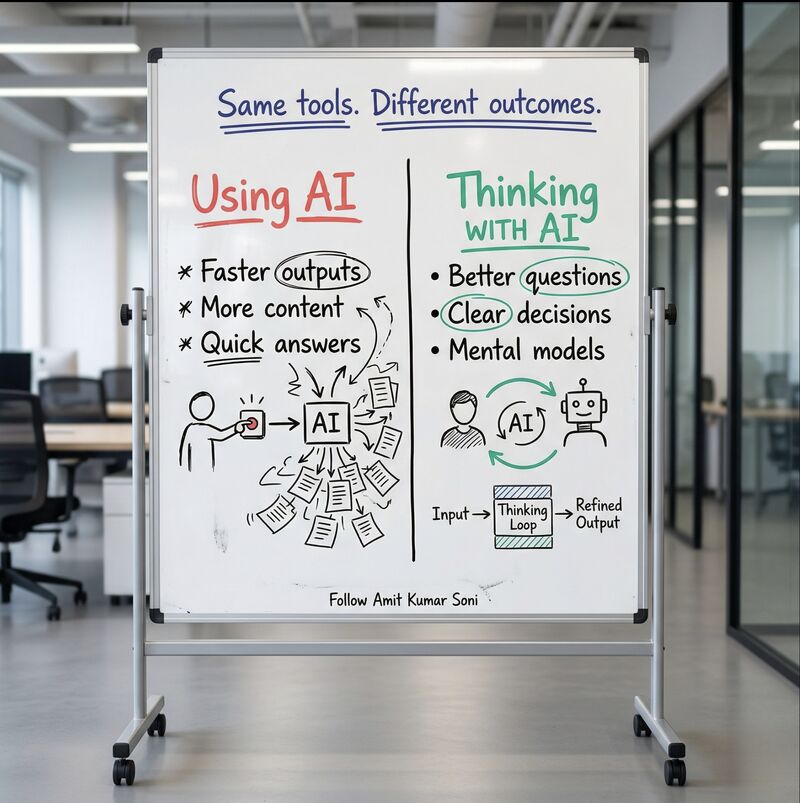
What do I attribute this to? I attribute it to the fact that communication with reasoning models closely mirrors communication between people. That is, when a person knows how to convey information, when a person knows how to request information—that is, when they build a dialogue taking into account the context of the situation—they arrive at the product of communication: understanding.
For example, I realize that my conversation partner doesn’t understand a certain area, and before I start overwhelming them with complex terminology, I should explain what we’re talking about and where we’re headed. In other words, I should give them context.
So, in my observations, the emergence of reasoning models perfectly complements the abilities of those who already knew how to communicate, and greatly increases their effectiveness by closing their gaps in instrumental knowledge.
The same engineers who always rejected concepts like “personality” and “communication” now can’t even establish normal communication with an AI model to get results.
What I recommend everyone now is not just studying the capabilities of artificial intelligence—it’s already becoming a necessity, like breathing.
I recommend developing communication skills specifically, because how we communicate not only with real people but also with AI models determines the outcome we reach:
– either this outcome, where our lives become better
– or very quickly, with our indispensable skills, we become like a hammer for these models, useful only for hammering in a nail and then being put back on the shelf.